In Africa’s history, the griot—a storyteller, praise singer, and oral historian—was the living archive of a community. Today, that tradition has found fresh life in spoken word poetry, where African poets are using performance, rhythm, and narrative to amplify voices, challenge injustice, and inspire new generations.
1. From Oral Tradition to Open Mic
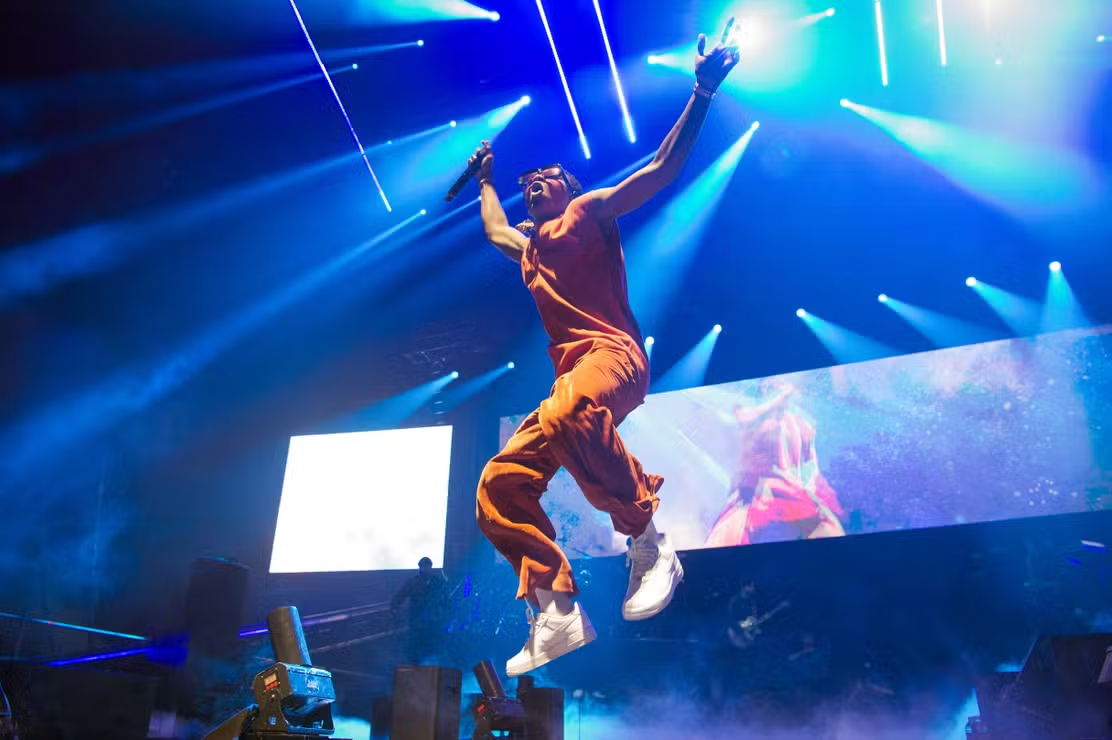
Africa has always celebrated the power of words: proverbs in Igbo, storytelling in Swahili, or the call-and-response chants of Wolof griots. Spoken word is the modern evolution of that legacy—delivered on slam stages, at festivals, and increasingly on YouTube, Instagram, and TikTok.
- Why it resonates: Spoken word blends the intimacy of poetry with the urgency of performance.
- Where it thrives: From Lagos’s poetry collectives to Nairobi’s Kwani? Open Mic and Cape Town’s vibrant slam culture.
2. The New Griots of Our Time
A new wave of poets is carrying the griot’s mantle into the 21st century:
- Lemn Sissay (Ethiopian–British): Tackles themes of identity, migration, and resilience.
- Wana Udobang (Nigeria): Known for fusing storytelling, music, and activism.
- Ngwatilo Mawiyoo (Kenya): Blends poetry with theatre, centering on African womanhood.
- Koleka Putuma (South Africa): Her collection Collective Amnesia sparked global conversations on race, gender, and politics.
These voices show that poetry is not only art—it’s social commentary and community building.
3. Themes Driving the Movement
African spoken word today tackles urgent issues:
- Identity & Diaspora: Exploring what it means to be African in a globalized world.
- Politics & Protest: Calling out corruption, inequality, and injustice.
- Love & Healing: Offering personal narratives of intimacy, trauma, and recovery.
- Futurism & Tech: Imagining Africa’s place in tomorrow’s digital world.
4. Platforms & Popularity
- Festivals: Poetry Africa (Durban), Lagos International Poetry Festival, and Pa Gya! in Accra give poets global stages.
- Digital Spaces: Instagram reels, TikTok clips, and Spotify spoken word playlists spread African poetry beyond borders.
- Education: Spoken word is being used in schools and workshops to teach critical thinking, self-expression, and confidence.
5. Why Spoken Word Matters Now
- Youth Connection: In a continent where over 60% of the population is under 25, poetry speaks directly to young voices hungry for representation.
- Cultural Diplomacy: Like Afrobeats and Nollywood, African poetry is becoming part of Africa’s global cultural export.
- Empowerment: It gives marginalized communities the microphone—literally.
Final Word
The griots of old carried history through rhythm and song. Today’s poets are doing the same, but with microphones, hashtags, and global audiences. The New Griot is not just a storyteller—it’s a truth-teller, activist, and visionary.
Spoken word is no longer a fringe art form; it’s a cultural movement shaping how Africa sees itself and how the world hears Africa.