


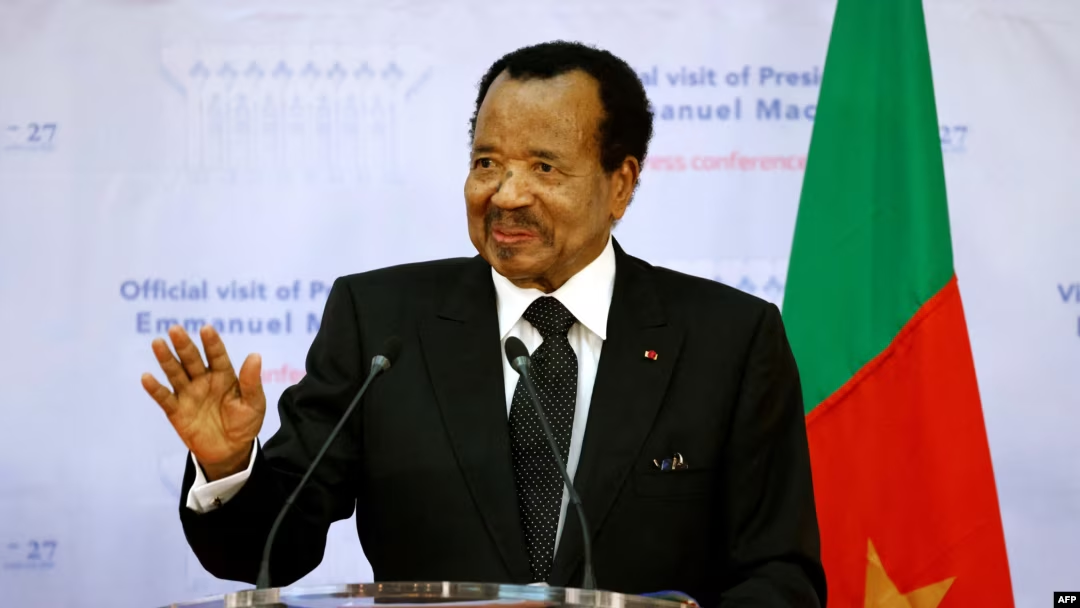
Yaoundé, Cameroon – The atmosphere in Cameroon is tense yet hopeful as the nation prepares to vote in a highly anticipated presidential election on October 12, 2025. At the center of it all is President Paul Biya, who at 92 years old has announced his intention to seek an eighth term in office. His candidacy, while expected, has sparked heated debate in a country weary of decades of one-man rule and anxious about its political future.
Voices from the Streets
In the bustling Mokolo Market of Yaoundé, traders and commuters exchange not only goods but also opinions on what the future holds.
“He has been there since before my parents were born,” said Clarisse, a 27-year-old university student. “We need change. The youth have energy, ideas, and technology on our side. But the system doesn’t listen to us.”
Not far away, a taxi driver named Etienne disagreed:
“People think stability is easy. Look at our neighbors, always fighting. At least with Biya we are not collapsing. Maybe he is old, but sometimes age brings wisdom.”
This generational divide captures the mood across the country — torn between continuity and the urgent call for renewal.
Opposition Disqualified
Adding to the tension is the exclusion of opposition leader Maurice Kamto, widely seen as the most formidable challenger. His supporters describe the move as a deliberate attempt to weaken any real contest.
In Douala, a group of young activists gathered near a community hall to discuss the news.
“If Kamto is not allowed to run, then what kind of election is this?” asked Joseph, a small business owner. “We are being asked to vote, but the choice has already been made for us.”
Institutions Under Scrutiny
Cameroon’s electoral body and Constitutional Council insist they are following the law, but many citizens remain skeptical. Years of delayed local and legislative elections, coupled with restrictions on press freedom, have eroded public trust.
“We cannot have a true democracy when the institutions answer only to one man,” argued Beatrice, a retired teacher in Bamenda. “An election must be fair, not just organized.”
Security and Regional Concerns
The campaign unfolds against the backdrop of armed conflict in the Anglophone regions and insecurity in the north, where communities still face threats from insurgents. For some, the priority is not political change but peace.
“My family fled from the fighting three years ago,” said Emmanuel, a farmer now living near Bafoussam. “I don’t care who wins. I just want my children to grow up without running from gunfire.”
What’s at Stake
The October 12 vote is more than a contest between candidates. It is a test of whether Cameroon can transition peacefully, whether its people believe their voices matter, and whether the country can break from a political culture where one man has defined the nation for over four decades.
As the countdown begins, the streets buzz with speculation. Will Cameroonians vote for continuity, fearing instability if Biya leaves? Or will they demand generational change despite the barriers facing opposition candidates?
One thing is certain: on October 12, the world will be watching Cameroon, but it is the voices on the streets — hopeful, frustrated, cautious, and determined — that will tell the real story of this election.


