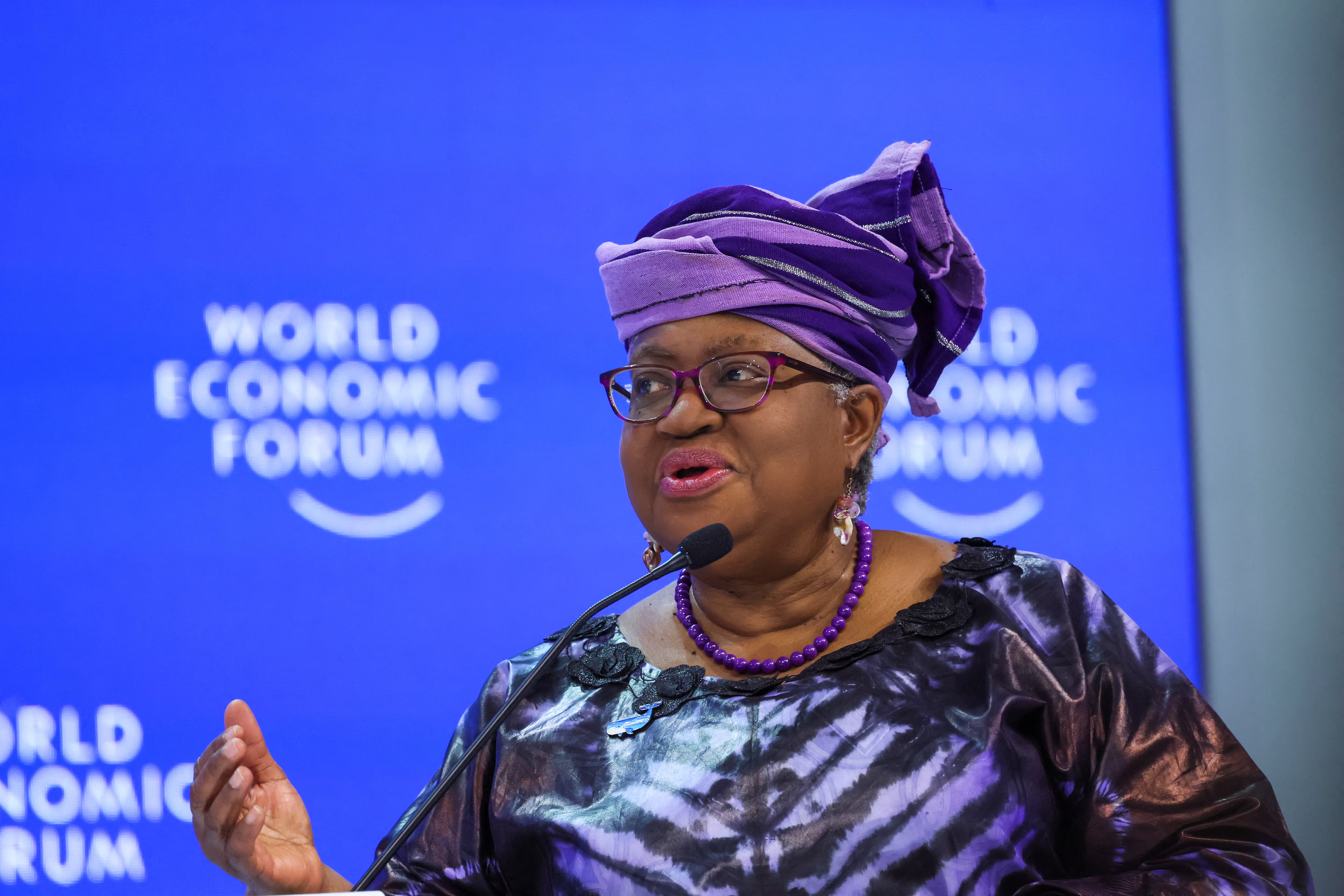
When Ngozi Okonjo-Iweala became Director-General of the World Trade Organization in March 2021, she made history as the first woman and first African to lead the institution. But beyond breaking barriers, her leadership signals a shift: toward trade access as a tool of inclusive growth, especially for Africa’s small businesses, women traders, and emerging economy sectors.
Her agenda is not just theory—it’s shaping how the WTO, African governments, and global investors think about trade, development, and fairness.
Who is Ngozi Okonjo-Iweala?
- She assumed office on 1 March 2021 as the 7th Director-General of the WTO, becoming the first African and woman in the role.
- Before WTO, she had a distinguished career: two terms as Nigeria’s Finance Minister, a senior role at the World Bank, and numerous contributions to global development.
- Her worldview is shaped by African development challenges and global economics, giving her a rare vantage point to bridge developed and developing world interests.
Her Vision: Trade That Works for Africa
1. Reimagining Globalization
Okonjo-Iweala argues that globalization must evolve. She highlights Africa’s “green comparative advantage” in clean energy, minerals for battery supply chains, and renewables. She believes Africa should not just export raw materials but integrate higher up the value chain—through processing, manufacturing, and trade in clean technologies.
2. Trade & Gender: Centering Women Traders
Under her leadership, the WTO has elevated gender in trade policy. Initiatives aim to ensure that trade reforms benefit women, not just large firms. For African women in cross-border trade—often in informal sectors—this approach could reduce invisible costs and systemic barriers.
3. Investment Facilitation & Reducing Red Tape
Okonjo-Iweala champions the Investment Facilitation for Development (IFD) Agreement, which seeks to set global benchmarks for transparency and reducing bureaucratic and regulatory burdens. For Africa, smoother investment flows can unlock capital for infrastructure, industrialization, and scaling SMEs.
4. Inclusive Growth & Trade Reform
She has placed inclusive growth at the heart of trade policies, warning that many people in rich countries feel left behind by globalization—and that Africa must avoid repeating those mistakes. For her, trade is not just about volume, but about fairness and equity.
Achievements So Far
- Strengthened investment transparency: Her push for the IFD framework is lowering entry barriers for developing nations seeking foreign capital.
- Focused on gender in trade policy: WTO is now more deliberate about ensuring trade reforms include women traders, especially from Africa’s informal sectors.
- Platform for African voices: She uses her visibility to spotlight Africa’s trade challenges—diaspora investment, value addition, and access to clean energy markets.
- Advocacy for WTO reform: She consistently calls for changes in dispute mechanisms, agriculture rules, and trade equity.
Challenges & Roadblocks
- Geopolitical tensions: Rivalries between major powers complicate consensus.
- Divergent interests: Rich and poor nations often disagree on agricultural subsidies, trade asymmetries, and transition periods.
- Capacity gaps in African states: Weak trade infrastructure and limited negotiating capacity make it hard to fully benefit from reforms.
- Implementation gap: Agreements like IFD or gender trade policies are only as good as the follow-through.
What It Means for Africa: Opportunities & Strategy
- Value addition over raw exports
Africa can leverage its mineral, agricultural, and renewable-resource base to produce finished goods, not just raw shipments. - SME & women trade empowerment
Use trade reforms to reduce non-tariff barriers that disproportionately affect small and women-owned firms, while building capacity to meet international standards. - Continental coordination under AfCFTA
Align WTO reforms with AfCFTA policies to unify Africa’s trade voice globally and strengthen bargaining power. - Strengthening infrastructure & institutions
Invest in customs modernization, digital trade platforms, port logistics, and negotiation capacity to maximize opportunities.
Conclusion
Ngozi Okonjo-Iweala’s tenure as WTO Director-General is more than symbolic. It is an active agenda to reform global trade so Africa can step off the margins and into fair participation. Her focus on gender, investment facilitation, and inclusive growth reframes trade not as zero-sum but as a pathway to shared prosperity.
For African citizens, traders, and policymakers, her leadership signals that global trade rules can—and must—work for Africa’s development, not against it.